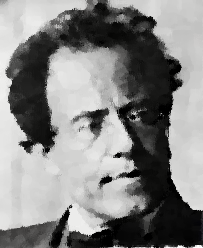
 “To find peace in the presence of the faultless is the desire of the one who seeks excellence; and is not nothingness a form of perfection?”
This is my favourite Thomas Mann qoute – from “Der Tod in Venedig”
(Udg. 12. maj 2016)
“To find peace in the presence of the faultless is the desire of the one who seeks excellence; and is not nothingness a form of perfection?”
This is my favourite Thomas Mann qoute – from “Der Tod in Venedig”
(Udg. 12. maj 2016)
The Punctum is a detail that pierces and punctures the heart. It is a strong emotional reaction that is unexpectedly found; that impacts our mind/memory, making us hold our breath. The Punctum can also be described as that part of the photography one carries in memory after ceasing to look at the photo. The feelings it generates for the onlooker is “love.”
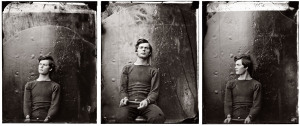
One famous example is the photograph of Alexander Gardner. Surprisingly, in terms of punctum, Barthes says “the punctum is: he is going to die”.
The Ninth Symphony is the last work, that Mahler has finished.
Like “Das Lied von der Erde”, Mahler’s Ninth Symphony endeavors to obtain a new independence of the several voices, which is reflected in the instrumentation and causes an broken, ascetic orchestral sound.
The first movement starts with a basic motif from “Das Lied von der Erde”. A multitude of passages of previous works is worked up in the symphony (for instance themes from the fourth movement of the Third Symphony, the second movement of the Fifth, the first lied of “Kindertotenlieder”) numerous quotations or reminiscences of motifs by Beethoven and Bruckner do also appear.
In the sketch of the partition, there are informative autographic entries, which show clearly that Mahler associates memories and farewell thoughts with this work. In the first movement, he noted the exclamations: “O youth! Vanished! O love! Scattered!” and “Farewell! Farewell!”
The Eight Symphony , also called “Die Symphonie der Tausend”, reckons with four-part double choir, boys’ choir eight solo voices and full orchestra.
After having finished the composition, he wrote: “… It is the greatest thing that I have ever made. And so peculiar in content and form, that I can’t write about it. Imagine, that the universe begins to sound. No more human voices, but planets and suns are revolving.”
The first part is based on the hymn “Veni creator spiritus” by archbishop Hrabanus Maurus of Mainz (around 780-856). In the second part he set the final scene from Goethe’s Faust II to music.
He considered the Eight as his principal work, his message to mankind.
The Seventh brings the liberation from the mental agony of the Sixth Symphony. Here, no struggles were fought out, but contrasts were compares all of the sudden.
Also for this symphony Mahler demands again some unusual instruments: tenor horn (a kind of ‘bugle’), mandolin and guitar and even, in addition to the percussion section including kettledrums, drums and triangle, a tam-tam (a flat gong instrument), a tambourine and herd bells – he used them already in the Sixth.
The programmatic content of this symphony can be described as the struggle for existence of the wanting, creative man against the inexorability of destiny, which ends catastrophically with the undoing of the hero. Among all of Mahler’s symphonies, the Sixth is the only, that shows no way out and finishes in a gloomy minor key.
The orchestration outnumbers even the instrumentation of the fifth, but Mahler arranged the sound effects more economically. As characteristic sound symbols he uses herd bells and hammers: According to his own statement, the herd bells are the last tone that sounds from earth to a lonely person in farthest height, a symbol of total loneliness. The sound effect of the hammer stands for the blows, which brake finally the will.
The weighing down effect of destiny is represented by a recurrent motif symbol, the sudden change from A major to A minor triad.
According to Mahler’s wife Alma, the second passionate theme is supposed to reflect Alma’s position in Mahler’s life.
The first movement TTrauermarsch” – funeral march – (With measured steps. Severe. Like a conduct) is thematically and formally an integral part of the second. The powerful scherzo, which Mahler considered to be the most important movement of the symphony, was followed by an “Adagietto” for harp and strings, Mahler’s certainly most popular symphonic movement. According to Wilhelm Mengelberg, this music represents Mahler’s declaration of love to Alma Schindler, he met in November 1901 and married in March 1902. For the final movement, Mahler chose for the first time a rondo form. He will deal with it again in the finale of the Seventh.
For this symphony, Mahler demanded an enormous orchestral apparatus with a big orchestrated brass choir, which carries the musical action for a long time. The dominant of the brass sound had disadvantageous consequences for the distribution of the work.
Initially, the first movement was called “Die Welt als ewige Jetztzeit” and is so a pendant to the finale. The initial title of the second movement, “Freund Hein spielt auf”, is missing in the partition. It is replaced by the expression mark “Sehr zufahrend, wie eine Fiedel” – according to Mahler’s own statement, the Death plays here. To give the macabre dance the appropriate horrible effect, the solo violin is tuned up.
The Fourth Symphony is often considered to be an cheerful or humorous work – Mahler had entitled his first drafts ‘humoresque’ at first. He said: “There is the cheerfulness of a higher, strange world inside, which is for us horrible”, and: “There is a lot of laughing in my Fourth – at the beginning of the second movement.”
In 1895/96, Mahler composed the symphony in D Minor with alto solo, women’s and boys’ choir after words by Friedrich Nietzsche and verses from “Des Knaben Wunderhorn”. At that time, Mahler was a very busy conductor at the municipal theatre of Hamburg and conducted also the subscription concerts in Hamburg.
As in the second and Fourth Symphony, Mahler used also in this work texts from “Des Knaben Wunderhorn” and own previous lieder based on this texts. In the third movement, the lied “Ablösung im Sommer” is treated as motif. In the fourth movement, the voice develops in a free recitative (words from Friedrich Nietzsche’s “Also sprach Zarathustra”). The fifth movement (lasting only four and a half minutes) follows without transition, a setting to music of the naive-pious “Armer Kinder Bettlerlied” from the Wunderhorn.
With its six movements and the enormous apparatus composed of solos, choirs and orchestra, the Third Symphony departs from the usual symphonic system. Its duration (one and a half hours) is also uncommon.